

Introducing Michelle Rhee...
Everything you need to know about 3.1 Phillip Lim's new Head of Design.

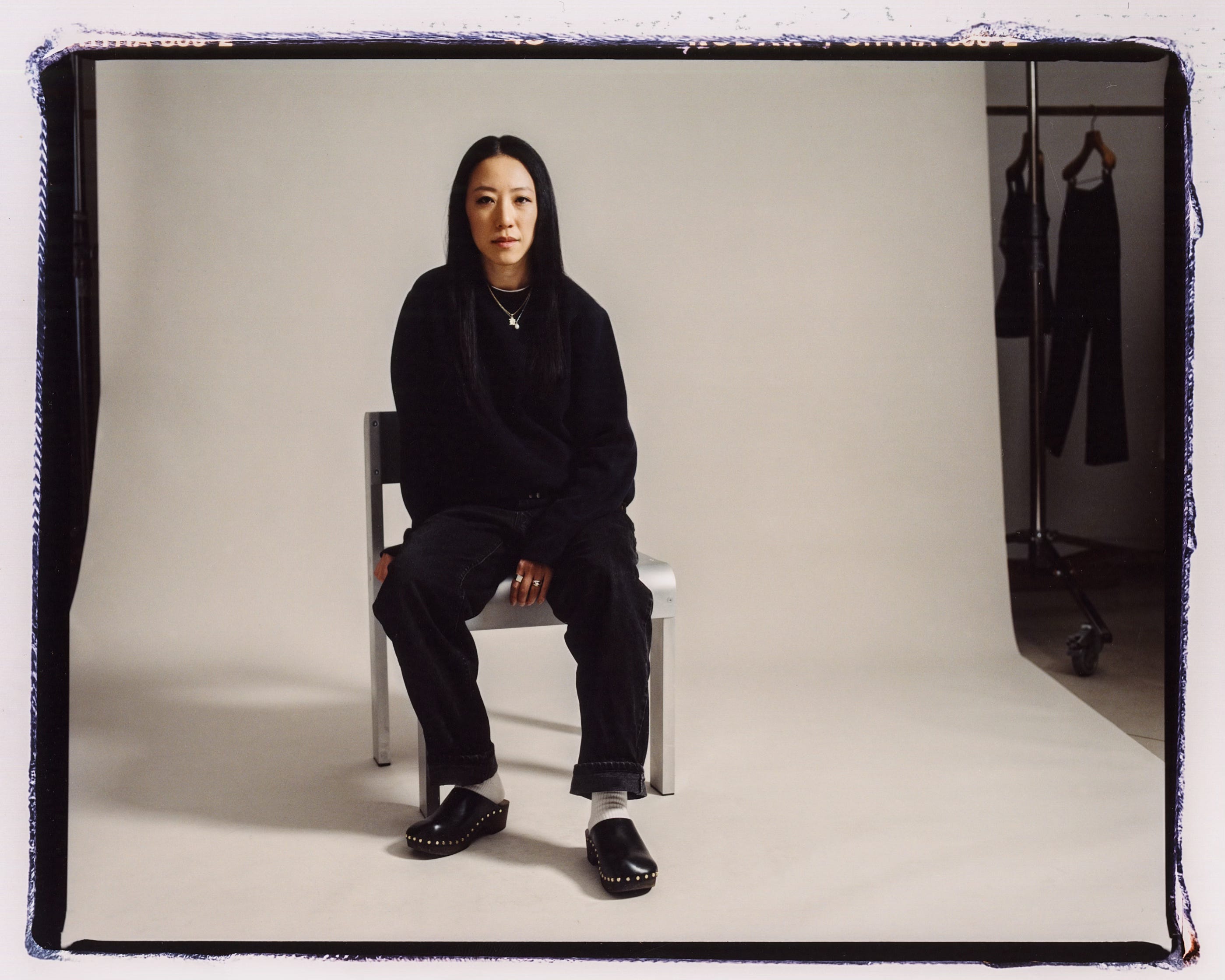
Following co-founder and creative director Phillip Lim’s departure in November 2024, the brand has transitioned under the sole leadership of co-founder and CEO Wen Zhou, a visionary force behind the label for more than two decades.
As we embarks upon our 21st year, this next chapter is not a reinvention but a powerful return to its roots. It is “3.1 re-rooted,” Zhou says. The evolution underscores the house’s enduring values of resilience, community, and the Asian American creative spirit, reaffirming its place as a new luxury designer brand.
In alignment with this vision, the brand is thrilled to announce the appointment of Michelle Rhee as Head of Design. A Korean-American designer with an impressive portfolio that spans Marc Jacobs, Derek Lam, and Area, Rhee will debut her first collection for the house with Spring/Summer 2026.
Ahead of the collection’s launch, we caught up with Rhee to ask all the burning questions you need answers to. Find them out here, first.
Can you share a bit about your background, where you are from and how you got into the fashion industry?
Michelle Rhee: I am from LA. I grew up in the suburbs there and I came to New York to go to NYU because I thought I wanted to study Art History and Film but my Sophomore year I randomly landed an internship at Harper’s Bazaar with the credits editor because I just loved fashion and I took the opportunity because that was the world I needed to be in. I knew that I wanted to design so after NYU I went to Parsons to get my fashion degree there.
Had fashion been a part of your life as a child or did you discover it later on?
MR: I think I always loved fashion and the idea of it but I never had any access to understanding how the industry worked or that it was a valid career so I never really considered it until I came to New York and I realized there were opportunities. I went back home after I became a designer and I found this book that I wrote in third grade for school and at the end it says “When I grow up I want to be…” and I wrote fashion designer. It felt so prophetic in a way. After third grade that thought got lost and I never once thought that.
You have worked at major houses including Marc Jacobs, Derek Lam and AREA. What was it like working with such different aesthetics and how did your time at each place inform your approach now?
MR:They were all so different. At Marc Jacobs, it is such a huge house but I think Marc was always one of the major icons that I looked at when I thought about fashion to begin with and I think being there, the access to resources that they had, the design process was so hyper-creative. It was also really intense but I think that helped me to formulate my chops in the industry and figure out how to grind in some ways while also figuring out how to be super creative and not always thinking about the bottom line, which I think a lot of brands have to do. It was super inspiring, I was fresh out of college and it was my first job. It wasn’t easy but I definitely wouldn’t be where I am and have gotten all the experience that I have if I hadn’t gone through that. I was lucky enough to work with both Marc and his team. I really respect him. He is very personable, he sees every person and isn’t just on his throne. There were a lot of pinch me moments, one of the more impressionable moments was seeing something that I directly worked on and designed appeared on the runway. It was such a validating feeling as a designer especially that early on.
My next step after Marc was Derek Lam. It is a much smaller house, the clothes are way more pulled back and minimal and it felt more like dressing with an everyday value sensibility, really thinking about the customer’s end use. It was a much more practical way of designing but I think I needed that because at the end of the day you are designing for real people and real life. I learned about building a business and I think that working with a much smaller team you really own a lot more of the process and are holding hands with a lot more of the departments. That was a really big education in a different part of my brain as a designer.
At AREA, they are also a small New York brand and what I think is cool about them is that they are addressing a really specific audience. She is really sexy and really fun and really loud and that is the opposite of Derek Lam. I think I learned a lot about embroidery, embellishment, hardware, and techniques in ways that I hadn’t explored as much before.They are also hyper creative too so it was nice to be back in this other zone of fun.
You also have your own namesake label. Can you speak about how that came about?
MR: When I thought about my own brand it was less focused on business model and more about having a moment to do what I want to do and what that would look like. It was a very intuitive process. After having worked for so many other brands and catering to their audiences, I could just answer to my own voice and I wanted to figure out what that looked like. The process was so much more organic and a lot more intuitive and for me, ultimately, the woman that I want to be and the woman that I want to dress is very chic, she is not too try hard, but she loves fashion and feeling really special and being dressed in beautiful clothes. She is not screaming to be the loudest person in the room but she does feel really strong and she isn’t afraid to be noticed. Those are the qualities that I imagine always wanting to emulate. From there I used my business and merchandising brain to flesh out the collections and become my own salesperson and all of the stuff that goes along with it. I think that it was really prepared me for this role—to think about the bigger picture and not just about designing my pieces but thinking holistically about how to build a brand and how to tell a story.
How would you describe your namesake label in one word?
MR: Sophisticated but also fresh at the same time. Not sophisticated in a stuffy old way. She’s chic.
How would you describe your design philosophy and approach to creating ready-to-wear?
MR: Because I have had such different experiences I think it is really about taking the hyper creative and hyper fun but then also the super practical and the everyday and how to work in a business minded way and taking all of those worlds and putting it together. I feel that my experience really prepared me for this position because Phillip Lim is a brand that is really fun, wants to be playful, and is exciting. It’s not trying to be hidden. The customer wants to be seen and is a fashion girl and what I love about this brand is that it is still practical. She is wearing these clothes in real life, whether it’s to work or an event and the offerings are always the most special version of whatever that thing is that she is wearing.
What was it about 3.1 Phillip Lim that drew you to this opportunity?
MR: To be honest after I left AREA, my namesake brand was on my heart and what I wanted to do so I think that experience was so fulfilling and the dream after having worked for three other brands. This opportunity at Phillip Lim sort of came out of nowhere. It’s not necessarily that I was looking for an opportunity like this but when it came my way it was a very surreal opportunity to be able to be the Head of Design for a brand that has been in New York for a really long time and to me is one of the major brands in New York City. It is a brand that I looked at when I was in school thinking was one of the coolest brands. It informed a lot of what I thought about when I thought of the New York fashion scene, especially when I was younger. To be able to have this opportunity is a huge moment, an honor and not something that I thought was in the cards.
How would you like to see the brand grow and evolve with you at the helm?
MR: I have had this discussion with Wen because she really knows the whole history of the brand, but I think craft is something that we are really trying to focus on and think about. When I look back at earlier collections there are a lot of really beautiful hand-done pieces (embroidery, embellishments, beading, finishes) that helped to tell the story of the brand and there was this human touch behind everything. That felt really important and we are applying that to upcoming seasons.
Are there certain 3.1 Phillip Lim sensibilities that you plan to keep in tact?
MR: This might sound contradictory but I think what makes our brand our brand is a mix of a hard utility vibe — zippers, hardware, studs, snaps—that is such a big part of the brand and then also this hyper femininity and romantic sensibility with laces, fluid satins. It’s that juxtaposition that really makes the brand and those pieces address that hard and soft, masculine feminine contrast.
Typically when a new Head of Design comes in they can either lean on past collections and keep the brand’s DNA similar or overhaul it completely. Which path are you going down?
MR: What the brand does well I think it does well and I really want to respect and honor Phillip’s legacy and what he has built. The brand has been around for over 20 years which is really an incredible testimony but at the same time as far as houses go it’s newer, its a modern brand and for that reason I don’t feel like we need to totally turn it on its head. The Phillip Lim woman was built around a certain person and she still exists today. I grew up looking at the brand and I am still here today still wanting to wear the brand and I don’t think we need to abandon that. My focus is looking at the history—I think there is so much to pull from, there are seasons that I still remember and look back on thinking how cool and chic they were and I want to create that feeling for people today using our house codes and using what the brand is known for while being really mindful of who this woman is today. I really want it to feel like we need this brand in this day and age in New York. It has to be important, it can’t be a yesterday brand. It needs to feel fresh and address the things that are happening in culture, community and how women are dressing right now and what the pieces are that she’s reaching for that make her feel really special and of the moment but not in a hyper trendy way.
Do you have a favorite 3.1 Phillip Lim collection that you find yourself pulling references from as you create new pieces?
MR: I distinctly remember the Spring 2013 and Fall 2013 collections. Maybe it’s because that is when I was coming into my own as a woman and learning about fashion in New York and really getting into the fashion world but I still look back and remember the pieces from the collection and wanting them. They are seared into my brain.
Who do you think the 3.1 Phillip Lim woman is? What is her lifestyle like and how does she incorporate fashion into it on a daily basis?
MR: I think she is definitely someone who is modern and in touch with what is happening in the world. She’s someone in her thirties—I think that has always been our woman. That age even in itself says something. She’s still young, but she’s also growing into her own. There is a sophistication and a maturity to her now and that also defines her wardrobe. She is someone who understands art and fashion, she appreciates color and materials and she is very in tune with what is expensive and understands quality. She is also a traveler. She is a West Coast-East Coast girl. That is also who I am, an LA-New York girl. There is something about her sensibility that is laid back and not uptight but she’s also very much a city girl. She wants to look cool, there is an edge to her.
Who are some of your inspirations when it comes to designing ready to wear?
MR: It’s a mix. I think my brain is very holistic. There is not just one avenue that I pursue or look to for inspiration. Because I studied Art History I do pull a lot from art references, so painters, sculptors, architects, furniture—I am constantly inspired by the use of materials, colors, techniques, that aren’t necessarily clothing related but to me are in the world of visual aspects. Even music, I grew up being in the classical music world. I played classical piano and oboe in orchestra which sounds so nerdy but I love classical music. Music is not a visual medium but what I love and appreciate about the arts is the sense of emotion and how something beautiful makes you feel. There is even beauty in sadness, there is this range of emotions and at the end of the day as an artist it tells a bigger story. With fashion I want to make pieces that make people feel a certain way, it’s not just about wearing a top because you need a top but how does it make you feel and how does it narrate the story of your life…
There are obviously designers that I look to and I am inspired by the way that they think and the way that they constructed clothes, whether it’s vintage references or fabrications. There is so much to learn from. I have had my fair share of experiences but there are decades and decades of things that other designers have done in the past.
Is there a particular designer that you find yourself drawn to?
MR: I respect people for different reasons. When I think of Margiela, I think about how he did something that nobody else is doing and the aspect of not caring about what people thought is so inspiring. Even the way he thought about clothes and the techniques—nobody thinks that way. Miuccia Prada to me is also such a genius. I always wonder how she can take such classic things and turn them on their head and the way that she pulls a collection together is genius.
How would you describe your first collection for 3.1 Phillip Lim? What are some of your favorite pieces and why?
MR: When anyone joins a house the starting point is really about looking at the archives and looking back at the history. What is this brand? Who does this brand stand for? What are the sensibilities that we want to honor and carry forward? That was all a big part of how I started approaching the collection. Also it was important for me to bring in my touch. I love color, I wanted to bring even more of a sense of ease and wearability into it. I was thinking about all of those key elements and then building around the sensibilities.
There are a few groups from the collection that I love. One of the pieces that I feel is really special is from a group that is in this heavy, structured satin. I love of a bit of evening and glam but done in a refined and not overly complicated way. So we have that structured satin group with this really beautiful studding and eyelet rings, silver hardware and crystals that feels really special but wearable at the same time. And even the way that we treated denim this season, we really wanted to relax her so we took the waistbands off and we took the pockets off and left ghost patches, so just relaxing it was the vibe.
And now for the lightning round…
Star sign? Gemini. People don’t think I am a Gemini…I hear I am an unexpected Gemini.
Favorite season? Fall.
Wardrobe MVPs? I have these vintage menswear pants that I wear everyday. They came out of my husband’s closet. I think they are vintage. I am not sure if they came from a thrift store or a cooler vintage place.
Style icon? I don’t know how on brand this is but I really love Zoe Kravitz. The way that she wears clothes is just the coolest. I wish I had her aura to pull anything off.
Something you would never wear? Something overly body-con. I am definitely more of a baggy girl. At most I will wear like a little t-shirt or tank top. That is far as I will go.
Favorite decade for fashion? 90s.
Favorite genre of music? Classical and also Indie chill vibes, nothing that hypes me up too hard. I really love Olivia Dean.
Favorite food? I am Korean so anything Korean I will always be down for.
Favorite travel destination? I always still think about the week I had in Ibiza. Not the party side, I am not a clubber but it was just the most beautiful and relaxing week I have ever had.
TikTok, Instagram or Substack? Im a true Millennial—Instagram.